
to see full details of a programme, please click its title
| 130 : Textbook Diplomacy (1) | ||||
| first broadcast: Wed Jan 27 2010 |
10.00 am World Service |
presenter: Mark Whitaker |
producer: Mark Whitaker |
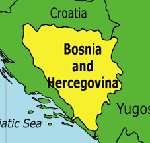 |
| In Europe, Africa, the Middle East, and Asia historians are struggling to produce school textbooks that will help overcome deep-seated misunderstandings and hatreds between neighbouring states. This week - South Africa | ||||
| 131 : Textbook Diplomacy (2) | ||||
| first broadcast: Wed Feb 3 2010 |
10.00 am World Service |
presenter: Mark Whitaker |
producer: Mark Whitaker |
|
| In Europe, Africa, the Middle East, and Asia historians are struggling to produce school textbooks that will help overcome deep-seated misunderstandings and hatreds between neighbouring states. This week -- Europe | ||||
| 132 : Geo-engineering the Climate | ||||
| first broadcast: Wed Mar 10 2010 |
9.00 pm Radio 4 |
presenter: Mark Whitaker |
producer: Mike Hally |
 |
| Following December's climate conference in Copenhagen the world is now committed to holding global warming to a maximum of 2 degrees centigrade -- in theory. But without a binding treaty to curb carbon emissions, there's growing interest in "geoengineering" as a kind of insurance policy against the possibility that the worst predictions of some climate scientists come true. Mark Whitaker reports on research in key centres in Britain and the USA into ways of removing carbon dioxide from the atmosphere or reducing the amount of sunlight reaching the earth -- and on the massive technical, financial and political hurdles they face. | ||||
| 133 : The Death-Ray in Your Pocket - 50 Years of Lasers | ||||
| first broadcast: Wed Jun 2 2010 |
9.00 pm Radio 4 |
presenter: Hermione Cockburn |
producer: Mike Hally |
|
| It's often claimed you're never more than 10 feet from a rat, and you could probably say the same about lasers. In the home and at the shops, throughout medicine, the military, and almost everywhere else the laser has become one of the most ubiquitous pieces of modern technology. And that's in just 50 years, not bad for a device that, after its first successful test on 16th May 1960 was immediately dubbed “a solution looking for a problem”. | ||||
| 134 : Britain on the Bottle (1) | ||||
| first broadcast: Mon Jul 19 2010 |
3.45 pm Radio 4 |
presenter: Mark Whitaker |
producer: Mark Whitaker |
 |
| King James 1: Drunkenness “is not one sin, but all sins”, said a preacher in 1624. Mark Whitaker begins his history series on the politics of alcohol with King James I’s campaign against it. | ||||
| 135 : Britain on the Bottle (2) | ||||
| first broadcast: Tue Jul 20 2010 |
3.45 pm Radio 4 |
presenter: Mark Whitaker |
producer: Mark Whitaker |
|
| The Gin Act, 1736 Continuing his narrative history series Mark Whitaker explores the eighteenth century Gin Craze, the response to it of Defoe and Fielding, and what the authorities did. | ||||
| 136 : Britain on the Bottle (3) | ||||
| first broadcast: Wed Jul 21 2010 |
3.45 pm Radio 4 |
presenter: Mark Whitaker |
producer: Mark Whitaker |
|
| The Beer Act, 1830 Continuing his series on the politics of alcohol, Mark Whitaker explains why in 1830 the British government thought easier access to beer would solve the problem of drunkenness. | ||||
| 137 : Britain on the Bottle (4) | ||||
| first broadcast: Thu Jul 22 2010 |
3.45 pm Radio 4 |
presenter: Mark Whitaker |
producer: Mark Whitaker |
|
| The 1872 Licensing Act and the Challenge of Temperance At the General Election of 1872 one of the most divisive issues between the parties was drink. Mark Whitaker shows how the temperance movement had got a grip on political life. | ||||
| 138 : Britain on the Bottle (5) | ||||
| first broadcast: Fri Jul 23 2010 |
6.10 pm Radio 4 |
presenter: Mark Whitaker |
producer: Mark Whitaker |
|
| Political Thinkers and the Drink Question Continuing his history series on the politics of alcohol Mark Whitaker shows how for John Stuart Mill and T.H. Green the ‘Drink Question’ raised the central dilemmas of liberalism. | ||||
| 139 : Britain on the Bottle (6) | ||||
| first broadcast: Mon Jul 26 2010 |
3.45 pm Radio 4 |
presenter: Mark Whitaker |
producer: Mark Whitaker |
|
| ‘Habitual Drunkards’ and the Asylum: As part of his history series on the politics of alcohol Mark Whitaker looks at the late C19th panic over ‘habitual drunkards’, when special asylums were built for them. | ||||
| 140 : Britain on the Bottle (7) | ||||
| first broadcast: Tue Jul 27 2010 |
3.45 pm Radio 4 |
presenter: Mark Whitaker |
producer: Mark Whitaker |
|
| The Central Control Board: Continuing his series on the politics of the ‘Drink Question’ Mark Whitaker looks at the Central Control Board, set up in 1915 to run some of the liquor trade for the state. | ||||
| 141 : Britain on the Bottle (8) | ||||
| first broadcast: Wed Jul 28 2010 |
6.12 pm Radio 4 |
presenter: Mark Whitaker |
producer: Mark Whitaker |
|
| The Improved Pub: Mark Whitaker’s series on the politics of alcohol reaches the 1920s. With consumption falling, and nationalisation threatened, the industry invested heavily in ‘improved pubs’. | ||||
| 142 : Britain on the Bottle (9) | ||||
| first broadcast: Thu Jul 29 2010 |
3.45 pm Radio 4 |
presenter: Mark Whitaker |
producer: Mark Whitaker |
|
| The Doctors Take Over: Continuing his series on the politics of alcohol in Britain Mark Whitaker looks at how and why the NHS, in the 1960s, embarked on the hospital treatment of alcoholics. | ||||
| 143 : Britain on the Bottle (10) | ||||
| first broadcast: Fri Jul 30 2010 |
3.45 pm Radio 4 |
presenter: Mark Whitaker |
producer: Mark Whitaker |
|
| The ‘Drink Question’; Past and Present To round off his history series on the politics of alcohol Mark Whitaker talks to Britain’s leading historians on the subject, asking them how the past can inform present policy. | ||||
| 144 : William Quilliam | ||||
| first broadcast: Wed Oct 20 2010 |
11.00 am Radio 4 |
presenter: Mark Whitaker |
producer: Mark Whitaker |
 |
| 1. The programmes explores the life of one of the most extraordinary and controversial Victorians – William Quilliam, who established the first community of English Muslims in Liverpool in the 1890s. | ||||
| 145 : The New MBAs (1) | ||||
| first broadcast: Mon Nov 15 2010 |
11.00 am Radio |
presenter: Mark Whitaker |
producer: Mike Hally |
 |
| A critical look at how UK business schools are responding to the Crash of 2008 by teaching more about ethics, sustainability and corporate responsibility (part 2 will look at the US) | ||||
| 146 : The New MBAs (2) | ||||
| first broadcast: Mon Nov 22 2010 |
11.00 am Radio 4 |
presenter: Mark Whitaker |
producer: Mike Hally |
 |
| Following last week’s look at the UK, this programme examines how American business schools are responding to the Crash of 2008 by placing more emphasis on ethical issues. | ||||
| 147 : A Brave Medical Life | ||||
| first broadcast: Fri Dec 10 2010 |
11.00 am Radio 4 |
presenter: Mark Whitaker |
producer: Mark Whitaker |
 |
| 200 years ago Samuel Hahnemann published the founding text of homeopathy. This programme looks at his controversial life and ideas in the context of early 19th medicine. | ||||
to see full details of a programme, please click its title
| 120 : William Hazlitt, Philosopher (1) | ||||
| first broadcast: Mon Mar 2 2009 |
11.00 pm Radio 3 |
presenter: Jonathan Ree |
producer: Mark Whitaker |
|
| William Hazlitt is recognised as a founder of English literary criticism and a magnificent exponent of the art of the essay. But he spent the first half of his career grappling with abstract questions in philosophy, and these 15-minute talks evoke and celebrate Hazlitt’s work as a philosopher, and show how it helped shape the celebrated ‘familiar style’ of his later essays. One: Winterslow | ||||
| 121 : William Hazlitt, Philosopher (2) | ||||
| first broadcast: Tue Mar 3 2009 |
11.00 pm Radio 3 |
presenter: Jonathan Ree |
producer: Mark Whitaker |
|
| William Hazlitt is recognised as a founder of English literary criticism and a magnificent exponent of the art of the essay. But he spent the first half of his career grappling with abstract questions in philosophy, and these 15-minute talks evoke and celebrate Hazlitt’s work as a philosopher, and show how it helped shape the celebrated ‘familiar style’ of his later essays. Two: William Hazlitt Snr | ||||
| 122 : William Hazlitt, Philosopher (3) | ||||
| first broadcast: Wed Mar 4 2009 |
11.00 pm Radio 3 |
presenter: Jonathan Ree |
producer: Mark Whitaker |
|
| William Hazlitt is recognised as a founder of English literary criticism and a magnificent exponent of the art of the essay. But he spent the first half of his career grappling with abstract questions in philosophy, and these 15-minute talks evoke and celebrate Hazlitt’s work as a philosopher, and show how it helped shape the celebrated ‘familiar style’ of his later essays. Three: the Fate of Modern Philosophy | ||||
| 123 : William Hazlitt, Philosopher (4) | ||||
| first broadcast: Thu Mar 5 2009 |
11.00 pm Radio 3 |
presenter: Jonathan Ree |
producer: Mark Whitaker |
|
| William Hazlitt is recognised as a founder of English literary criticism and a magnificent exponent of the art of the essay. But he spent the first half of his career grappling with abstract questions in philosophy, and these 15-minute talks evoke and celebrate Hazlitt’s work as a philosopher, and show how it helped shape the celebrated ‘familiar style’ of his later essays. Four: a Metaphysical Discovery | ||||
| 124 : William Hazlitt, Philosopher (5) | ||||
| first broadcast: Fri Mar 6 2009 |
11.00 pm Radio 3 |
presenter: Jonathan Ree |
producer: Mark Whitaker |
|
| William Hazlitt is recognised as a founder of English literary criticism and a magnificent exponent of the art of the essay. But he spent the first half of his career grappling with abstract questions in philosophy, and these 15-minute talks evoke and celebrate Hazlitt’s work as a philosopher, and show how it helped shape the celebrated ‘familiar style’ of his later essays. Five: Acquaintance with Poets | ||||
| 125 : Anthropology at War | ||||
| first broadcast: Fri Apr 24 2009 |
11.02 am Radio 4 |
presenter: Mark Whitaker |
producer: Mark Whitaker |
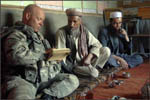 |
| The US Army has introduced a scheme which ‘embeds’ anthropologists with military units in Iraq and Afghanistan : the aim is to make military decisions more ‘culturally informed’, but the scheme’s caused a furore in the academic community. | ||||
| 126 : The Manuscript Hunter | ||||
| first broadcast: Wed May 13 2009 |
11.00 am Radio 4 |
presenter: Mark Whitaker |
producer: Mark Whitaker |
 |
| Over the past twenty years the archives of many of the U.K.’s most important living writers have ended up in America, bought for the University of Texas at Austin by Thomas Staley. Mark Whitaker profiles a remarkable and controversial man, and reports on efforts to stop the continuing export of our literary heritage. | ||||
| 127 : Inside the Virtual Anthill | ||||
| first broadcast: Mon Jun 1 2009 |
9.02 pm Radio 4 |
presenter: Gerry Northam |
producer: Mike Hally |
 |
| - 'Open Source Means Business'. A lot’s been said about ‘open source’ software, like the free web browser Firefox and the operating system Linux, but little about how thousands of programmers scattered around the world collaborate in a “virtual anthill” to create products that rival more commercial offerings. So in this programme Gerry Northam goes behind the scenes to see how it’s done – and to show how its ethos is being applied to other kinds of business, with some startling results. | ||||
| 128 : The Plight of the Bumblebee | ||||
| first broadcast: Wed Oct 21 2009 |
9.00 pm Radio 4 |
presenter: Louise Batchelor |
producer: Mike Hally |
 |
| Honeybees have hogged the news recently and surely everyone now knows they are essential to our agriculture but are dying in large numbers due to the mysterious “colony collapse disease”. What’s much less well known is that bumblebees are arguably just as important – indeed they pollinate many crops and flowers that honeybees don’t touch – and they too are in serious decline. | ||||
| 129 : Poppies are Red, Cornflowers are Blue | ||||
| first broadcast: Sun Nov 8 2009 |
11.45 am Radio 4 |
presenter: Mark Whitaker |
producer: Mike Hally |
 |
| The fourth in our series of annual ¼ -hour vignettes for Remembrance Sunday.
It's not just how the Poppy became the symbol of remembrance in Britain - though that is a fascinating story, rarely told in full - but also a deeper analysis of why it rapidly became such a strong and enduring symbol, to the point where some fear it is becoming over-exploited. Plus a look at France's rather less ubiquitous flower of remembrance, the blue cornflower, and through these symbols an insight into the two countries' different approaches to remembering those who have died in conflicts past. |
||||
to see full details of a programme, please click on its title
| 103 : Creative Writing Groups (1) | ||||
| first broadcast: Mon Feb 18 2008 |
3.30 pm Radio 4 |
presenter: Maggie Fox |
producer: Gillian Hush |
|
| "Mooncall", written by Karen Wolfe of Hornsea Writers. The full moon has a dramatic effect on Kenneth, which drives his sister to despair until a chance encounter with a nice old woman outside the butcher's brings a solution satisfactory to all. | ||||
| 104 : Creative Writing Groups (2) | ||||
| first broadcast: Tue Feb 19 2008 |
3.30 pm Radio 4 |
presenter: Rod Arthur |
producer: Mark Whitaker |
|
| "St John the Better", written by Celia Burney of Hexham Writers, is set outside an abandoned tower block, where a group of local lads have set up an unorthodox clubhouse. When they reluctantly report a strange wailing noise coming from an upstairs window, their action has unexpected consequences. | ||||
| 105 : Creative Writing Groups (3) | ||||
| first broadcast: Wed Feb 20 2008 |
3.30 pm Radio 4 |
presenter: Lynn Bains |
producer: Mike Hally |
|
| "Room Service" written by Cathy Bolton, of the Sheffield Hallam University Short Story Group. In which a chance encounter with a pregnant guest helps a bereaved hotel worker to move on after a terrible loss. | ||||
| 106 : Creative Writing Groups (4) | ||||
| first broadcast: Thu Feb 21 2008 |
3.30 pm Radio 4 |
presenter: Siobhan Finneran |
producer: Mike Hally |
|
| In "Nature's Way", written by Helen Cadbury from York University's Centre for Lifelong Learning, 'Merrill' is stuck looking after her idle brother, just as her mother did before her. But she hesitates when she gets a chance to escape her drudgery. | ||||
| 107 : Creative Writing Groups (5) | ||||
| first broadcast: Fri Feb 22 2008 |
3.30 pm Radio 4 |
presenter: Delia Corrie |
producer: Mark Whitaker |
|
| "Rowing Upriver from Bridge Cottage", written by Lesley Jackson of Sheffield Hallam University Short Story Group, shines a light on a long marriage through a river journey with changes of direction, arguments over destinations and the occasional sudden squall. | ||||
| 108 : North African Short Stories (1): The Crop | ||||
| first broadcast: Mon May 5 2008 |
3.30 pm Radio 4 |
presenter: Essam Edriss |
producer: Mark Whitaker, Mike Hally, Gillian Hush |
|
| Written by Gamal el-Ghitani: an Egyptian farmer is dazzled by a proffered deal from a glitzy international hotel; his sons don’t trust it at all. | ||||
| 109 : North African Short Stories (2): The Furnace | ||||
| first broadcast: Tue May 6 2008 |
3.30 pm Radio 4 |
presenter: Alia Alzougbi |
producer: Mark Whitaker, Mike Hally, Gillian Hush |
|
| Written by Rachida el-Charni: the degradations of work in a foreign-owned textile factory as experienced by a young Tunisian woman. | ||||
| 110 : North African Short Stories (3): If She Comes | ||||
| first broadcast: Wed May 7 2008 |
3.30 pm Radio 4 |
presenter: William El-Gardi |
producer: Mark Whitaker, Mike Hally, Gillian Hush |
|
| Written by Tayib Saleh: a trio of middle-class young people fantasise that opening a travel agency will allow them to escape from their own culture in Sudan. | ||||
| 111 : North African Short Stories (4): Provisions of Sand | ||||
| first broadcast: Thu May 8 2008 |
3.30 pm Radio 4 |
presenter: Sherif Eltayeb |
producer: Mark Whitaker, Mike Hally, Gillian Hush |
|
| Written by Said al-Kafrawi: an Egyptian man is ambushed by the past when he returns to the village of his childhood. | ||||
| 112 : North African Short Stories (5): You Taught Me To Love Life, Father | ||||
| first broadcast: Fri May 9 2008 |
3.30 pm Radio 4 |
presenter: Youssef Kerkour |
producer: Mark Whitaker, Mike Hally, Gillian Hush |
|
| Written by Arousia Naluti: what his wife’s pain in childbirth teaches a young Tunisian man about his country | ||||
| 113 : Clair Patterson - Scourge of the Lead Industry | ||||
| first broadcast: Mon Jul 14 2008 |
9.00 pm Radio 4 |
presenter: Hermione Cockburn |
producer: Mike Hally |
 |
| The extraordinary story of one man’s discovery of the global contamination of the environment by man-made lead compounds -- a story of brilliant applied science, painstaking research and a refusal to bow to vested interests. Preview picture of Patterson is copyright Caltech | ||||
| 114 : Olympic Arts | ||||
| first broadcast: Mon Jul 21 2008 |
11.02 am Radio 4 |
presenter: Mark Whitaker |
producer: Mark Whitaker |
 |
| It was called the ‘Pentathlon of the Muses’, and at each Olympic Games between 1912 and 1948 there were medals for architecture, sculpture, painting, music and literature. But most serious artists are not ‘amateurs’, so these forgotten and controversial contests were eventually brought to an end. Preview picture (right) copyright Mark Whitaker | ||||
| 115 : Peer Review in the Dock | ||||
| first broadcast: Mon Aug 4 2008 |
9.02 pm Radio 4 |
presenter: Mark Whitaker |
producer: Mike Hally |
 |
| ¨Peer Review¨ is supposed to be the ¨gold standard¨ of quality control for research projects and academic studies, yet evidence of its many deficiencies has been building up for over 20 years. That knowledge has been confined to the academic world until recently but now peer review’s tarnished image is being revealed to a wider audience. Rightly so, because this is no academic argument – when it comes to medicine, inadequate peer review of proposed new drugs and other treatments can be literally a matter of life and death. | ||||
| 116 : The Strange Story of Oliver Cromwell's Head | ||||
| first broadcast: Wed Sep 3 2008 |
11.02 am Radio 4 |
presenter: Mark Whitaker |
producer: Mark Whitaker |
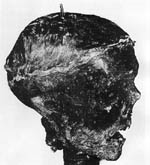 |
| September 3rd 2008 will mark the 350th anniversary of Oliver Cromwell’s death : but his severed head was only finally put to rest in 1960. This is the extraordinary story of what happened to it. | ||||
| 117 : Textbook Diplomacy | ||||
| first broadcast: Mon Sep 8 2008 |
11.02 am Radio 4 |
presenter: Mark Whitaker |
producer: Mark Whitaker |
 |
| Across Europe school history textbooks are being used to build bridges over deep fault lines of nationalist hatred or suspicion; but while it's proved easy enough to create a joint Franco-German textbook, the task is both more difficult and more urgent in a country such as Bosnia. | ||||
| 118 : Hamish Henderson - a Various Man | ||||
| first broadcast: Tue Oct 14 2008 |
11.30 am Radio 4 |
presenter: Fred Freeman |
producer: Mike Hally |
|
| He's been called "the most important Scottish poet since Burns" but he's better known overseas than elsewhere in the UK. Nelson Mandela sought him out after his release from Robbin Island, Pete Seeger gamely attempted some of his Scots dialect poetry and E P Thompson called him "that rare man, a poet". This programme gives a flavour of the extraordinary life and work of Hamish Henderson. | ||||
| 119 : The Menin Gate | ||||
| first broadcast: Sun Nov 9 2008 |
11.45 am Radio 4 |
presenter: Mark Whitaker |
producer: Mike Hally |
 |
| The Menin Gate in the little Belgian city of Ypres is an extraordinary symbol of remembrance - the Last Post has sounded every night since 1929 (bar WW2) and it's the most visited site on the Western Front. This is a little cameo for Remembrance Day, following ''the Roots of the British Legion'' last year and ''the Roots of Remembrance Day'' the year before. | ||||
to see full details of a programme, please click its title
| 101 : Occupation | ||||
| first broadcast: Fri Jul 20 2007 |
11.00 am Radio 4 |
presenter: Mark Whitaker |
producer: Mark Whitaker |
|
| An examination of the Bush Administration's claim that the post-WW2 occupations of Japan and Germany are a good historical analogy for the occupation of Iraq today. | ||||
| 102 : The Roots of the British Legion | ||||
| first broadcast: Sun Nov 11 2007 |
11.45 am Radio 4 |
presenter: Mark Whitaker |
producer: Mike Hally |
|
| It seems like the Royal British Legion has always been with us -- synonymous with Remembrance Day, red poppies and be-medalled veterans parading with quiet dignity past cenotaphs in London and around the country. Yet it grew out of an assortment of rival ex-services associations that themselves arose from the awful experience of 'total war' and the country's poor treatment of returning soldiers. These new groups were quite different from the traditional Victorian philanthropic charities that had previously looked after their welfare, for these were self-help groups and they asserted their rights rather than asking for charity. | ||||